Somewhere in a store, there is a cupboard with spare card machines. They are there because devices occasionally freeze, connections drop, and staff need a way to keep trading.
It is a practical precaution. It also raises a question: how much disruption have we come to accept as part of running a retail business?
A device that needs restarting on a quiet Tuesday may cause little inconvenience. The same failure during peak festive trading can hold up a queue, occupy staff and leave customers reconsidering their purchases. Repeat that across dozens or hundreds of stores, and the financial impact deserves attention.
Retailers know what they pay for payment processing. Transaction fees, device rentals and connectivity appear in budgets and supplier negotiations. What is less visible is the revenue lost when the payment environment cannot support the pace of trade.
By then, much of the investment in securing the sale has already been made. The stock is available. The marketing has worked. The customer has arrived, selected their goods, and is willing to pay. Losing that purchase at the final step is an expensive outcome.
The losses that are easy to overlook
An abandoned basket does not arrive on a supplier invoice. Nor does the time staff spend retrying transactions or finding a working device. Yet these are costs that store teams encounter directly, particularly when queues begin stretching down the aisles.
Payment approval rates deserve the same scrutiny. Some transactions fail because of insufficient funds or an incorrect PIN. Others fail because the infrastructure supporting the payment is not sufficiently resilient. Retailers need to understand the difference so they can identify which failures can be addressed.
Across a large store network, even a small deterioration in approval rates can put substantial revenue at risk. The stores have not changed. Neither have the stock or the number of customers coming through the doors. But fewer intended purchases are being completed.
That should form part of the regular conversation with a payment partner. Where are failures occurring? What is causing repeated attempts? Can the environment sustain peak volumes? What needs to change before the next busy trading period?
These questions connect the technical performance of payments with what finance and operations teams are working to achieve every day.
More ways to complete the sale
There is also an opportunity to reconsider where payment happens.
Fixed checkout lanes remain important, but they do not need to carry every transaction. With the appropriate POS integration, Android-based mobile devices allow staff to assist customers waiting in queues or complete purchases on the shop floor.
Consider a customer who has spent time with an employee choosing a product. The decision is made. Completing the purchase there and then removes another wait and allows that employee to see the sale through.
Retailers such as Yuppiechef and Poetry already use in-aisle payments. The value extends beyond convenience: it gives stores additional capacity to serve customers when demand is high and helps reduce the risk of purchases being abandoned.
Depending on the setup, payment devices can also work across multiple POS computers or systems. In environments such as filling stations with retail and restaurant operations, this flexibility can help businesses make better use of their equipment.
The right approach will differ by store format. A customer making a complex purchase may welcome a staffed counter. Someone buying a single item may prefer to pay immediately on the floor. A well-designed payment environment gives retailers room to accommodate both.
A closer look at the hardware behind checkout
The financial case extends to the equipment required to keep stores operating.
A traditional checkout can involve a PC, card terminal, scanner, specialised cabling and local server infrastructure. Each component needs to be purchased, maintained and supported. Across a retail chain, that is a substantial commitment.
Modern payment devices can take on functions previously handled by separate pieces of equipment. Consolidating those functions can change the economics of the checkout environment.
Ecentric’s analysis identified potential savings of approximately R600,000 per store over five years through consolidation, including equipment, cabling, networking and support costs. The opportunity depends on the existing setup and what can be consolidated, but it warrants consideration when retailers assess their next infrastructure investment.
There is an operational benefit too. Fewer components mean fewer items to maintain and fewer potential points of failure between a customer’s decision to buy and a completed sale.
Payment costs will always need careful management. For retail decision-makers, however, the assessment should also account for the sales the environment enables and the resources required to keep it running reliably.
The spare terminal in the cupboard may still have a role. It should sit within a wider plan for keeping stores trading, serving customers efficiently and protecting the revenue the business has worked to generate.
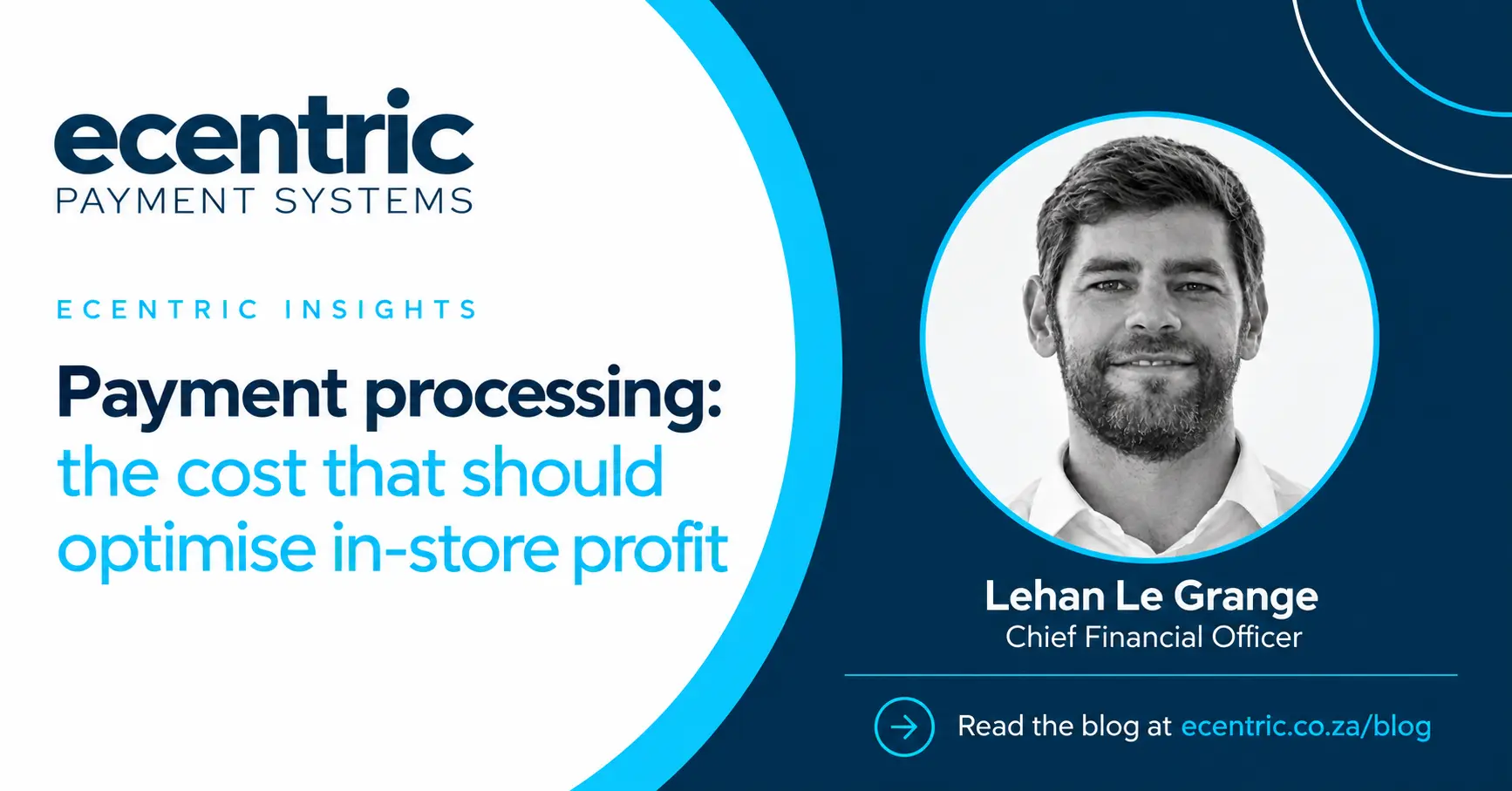
By Lehan Le Grange, Chief Financial Officer at Ecentric Payment Systems